What Is Toss FacePay? Understanding Korea’s Facial Recognition Payment System
Imagine walking into a café, picking up your coffee, and leaving without ever pulling out a card or your phone. Instead, your face simply pays the bill. This isn’t science fiction anymore, South Korea’s fintech leader Toss has introduced a bold innovation: facial recognition payments, Facepay.
A Technological Revolution in Payments
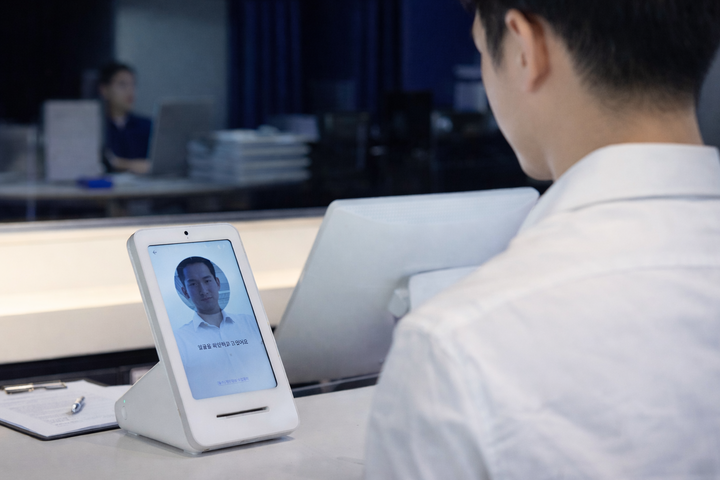
At its core, Toss FacePay replaces your physical wallet with your face. With FacePay, users register their face once in the Toss app through an identity verification process. After that, paying becomes frictionless. Users can make payments by looking at a dedicated terminal at checkout. The system then:
- Recognizes the user’s face in under 1 second, without the need to open any app or take out a card.
- Uses advanced AI-based facial recognition models that can adapt to changes in appearance and detect real faces rather than images to prevent spoofing.
- Runs a 24/7 fraud detection system (FDS) to instantly catch suspicious activity and includes compensation protections for users if something goes wrong.
No card.
No smartphone.
No QR code.
From a user perspective, this is more than just convenience, it’s a paradigm shift in how identity and value exchange collide. Instead of opening a wallet, wallet apps, or tapping a phone, the payment starts and ends with you.
A Powerful Innovation, but What About Awareness?
Despite its potential, the FacePay revolution remains relatively under the radar in Korea, even in tech-savvy cities like Seoul. This contrast is especially striking when you look at the infrastructure already in place:
According to industry coverage, roughly 135,000 stores nationwide have installed payment terminals capable of supporting facial payments: about 9 % of the 1.5 million point-of-sale devices in Korea.
Within Seoul alone, Toss expanded its pilot to 20,000 merchants across the city shortly after launch.
Even with these numbers, many Koreans and merchants are still surprised when they first encounter someone paying with their face. Anecdotally, it’s not uncommon to hear reactions like “Wait, you just used your face?” or “I didn’t even know this was a thing.” Even among Asiance’s employees. This is precisely because:
- Awareness among everyday consumers is still low, with many sticking to familiar QR or credit card payments simply out of habit.
- Some merchants haven’t fully promoted the feature, even if their terminals can support it.
- Cultural concerns about biometric privacy and security make people hesitant to upload facial data, even with strong encryption systems in place.

Challenges in Facial Recognition Payment Adoption in Korea
The emergence of facial recognition payment in Korea highlights an important reality: even the most advanced fintech innovation must align with user habits, trust, and visibility.
First, South Korea already has a highly efficient digital payment ecosystem. Contactless cards and QR payments are deeply embedded in everyday life, which means biometric payment solutions must offer clear added value.
Second, consumer trust in biometric payments remains a strategic priority. While advanced encryption and fraud detection systems are in place, users naturally seek reassurance when it comes to storing facial data.
Merchant activation is another key lever. Expanding the use of facial recognition payment terminals requires operational effort and strong incentives, particularly in competitive retail environments.
Finally, awareness remains limited. Even in Seoul, where infrastructure is expanding, many consumers are simply unaware that this payment option exists.
These challenges are not barriers, they are growth drivers. As trust, visibility, and merchant engagement increase, biometric payment adoption could accelerate rapidly.
Looking Beyond FacePay: What’s Next in Payments?
If FacePay is the beginning, what comes next?
The evolution of payments seems to be moving toward:
- Fully biometric authentication
- Invisible checkout systems
- AI-driven financial identity ecosystems
We may soon see:
- Multimodal biometrics (face + voice or behavioral authentication)
- Seamless integration between physical retail and digital finance ecosystems
Payment systems that anticipate transactions before users even initiate them.
Toss appears to be positioning itself at the forefront of this transformation, not just replacing the wallet, but redefining what a wallet is.
Toss itself seems keenly aware of these possibilities. The company is continuing to scale FacePay nationwide, targeting from hundreds of thousands of locations in 2025 and over a million by 2026, and is looking to broaden the reach beyond convenience stores into cafes, gas stations, movie theaters, and more.In a world where the distinction between identity and transaction blurs, Toss wants to place itself at the center of the next generation of payment innovation, one smile at a time.