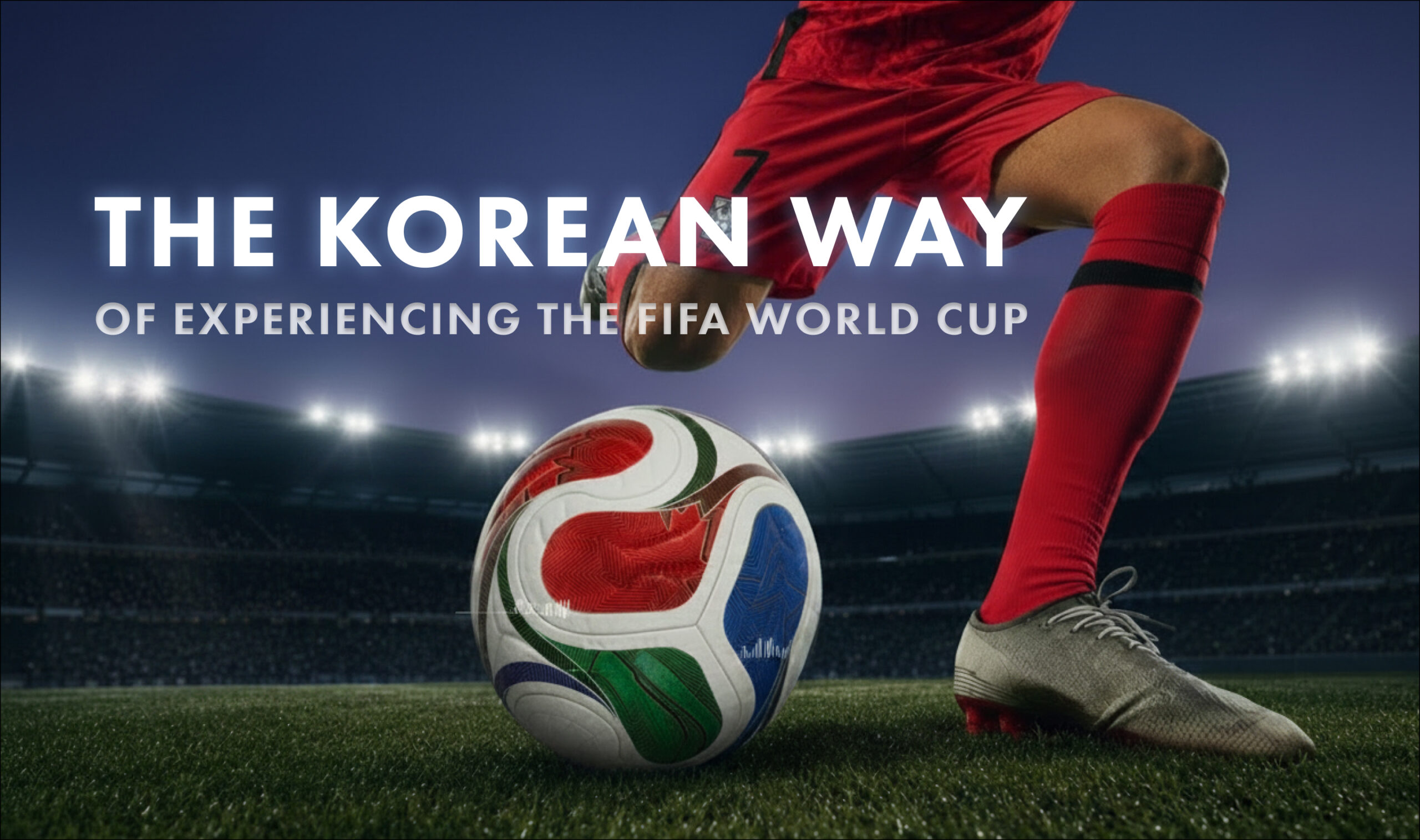
From packed city squares to millions of concurrent viewers online, South Korea is turning the 2026 FIFA World Cup into a uniquely connected national experience.
When South Korea opened its FIFA World Cup 2026 campaign with a 2-1 victory over the Czech Republic, the story extended far beyond the pitch.
While football fans around the world followed the match from home, South Koreans experienced the tournament through a combination of large-scale public gatherings, digital communities, and streaming platforms that blurred the lines between online and offline engagement.
The result is a World Cup experience that feels distinctly Korean: highly connected, community-driven, and deeply integrated into the country’s digital ecosystem.
For brands, platforms, and organizations looking to understand consumer behavior in Korea, the tournament offers valuable insights into how large-scale events are increasingly experienced in the country.
Key Statistics from South Korea’s Opening Match
- 16,000–18,000 fans gathered at Gwanghwamun Square in Seoul.
- 4.82 million concurrent viewers watched through Naver’s CHZZK platform.
- 360,000+ viewers joined creator-led watch parties.
A Nation Still Gathering Together
South Korea’s collective viewing culture remains one of the most recognizable aspects of its football identity.
The iconic images of the 2002 FIFA World Cup, when millions of supporters wearing red filled the streets of Seoul, remain deeply embedded in the country’s collective memory. More than two decades later, that tradition continues.
For South Korea’s opening match against the Czech Republic, an estimated 16,000 to 18,000 fans gathered at Gwanghwamun Square in central Seoul despite the match taking place on a weekday morning.
This level of participation demonstrates something increasingly rare in today’s fragmented media landscape: football in Korea remains a shared cultural moment capable of bringing together thousands of people in public spaces.
Unlike many countries where the World Cup is primarily consumed through television broadcasts, South Korea continues to transform major sporting events into collective urban experiences.
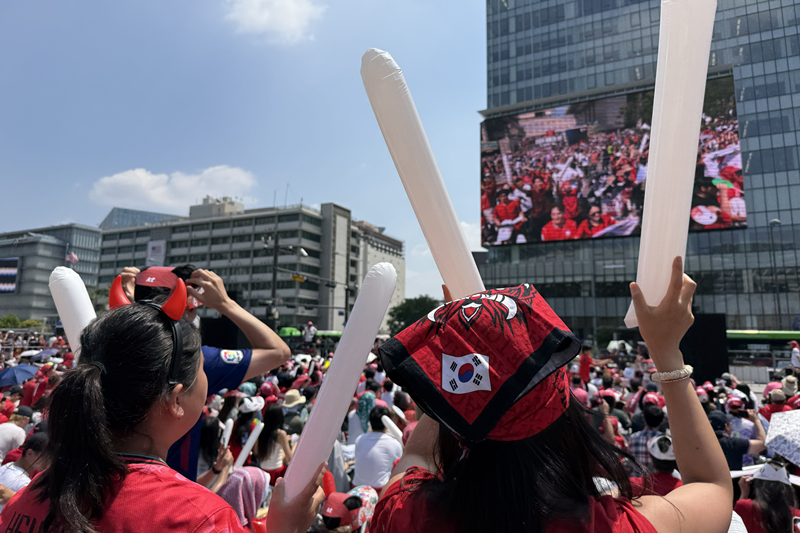
Red Devils on June 12 cheer at a public viewing of Korea’s FIFA World Cup opener against Czechia (Czech Republic) on massive screens at Gwanghwamun Square in Seoul’s Jongno-gu District (Credits: Hong Angie for Korea.net).
The Digital Stadium: How CHZZK Broke Records
If Gwanghwamun represents the physical side of Korea’s football culture, CHZZK illustrates its digital evolution.
What makes CHZZK particularly interesting is that it goes far beyond traditional sports broadcasting.
For the FIFA World Cup 2026, Naver transformed the platform into a complete fan engagement ecosystem. In addition to livestreaming all 104 matches, CHZZK introduced co-viewing channels hosted by popular streamers, community spaces, prediction events, and AI-powered content experiences.
The strategy appears to be paying off. During South Korea’s opening match against the Czech Republic at 11AM, CHZZK reached a record 4.82 million concurrent viewers, while a single creator-led watch party attracted more than 360,000 viewers.
Artificial intelligence also plays a central role in the experience. Through AI-generated highlights, automated match clips, and FIFA data-powered AI briefings, viewers can instantly access key moments and match insights without watching the full game.
Rather than simply replicating television online, CHZZK demonstrates how Korean digital platforms are redefining sports consumption through community participation, creator-led engagement, and AI-enhanced content.

Naver founder and Global Investment Officer Lee Hae-jin and Nvidia CEO Jensen Huang appear on a Chzzk livestream. (Photo: Naver)출처 : The Elec Inc.
What Brands Can Learn From Korea’s World Cup Experience
For international brands, the World Cup provides a valuable case study of consumer engagement in South Korea.
Three key lessons stand out:
1. Community Drives Engagement
Whether offline in Gwanghwamun or online through CHZZK, Korean consumers actively seek shared experiences.
2. Digital Platforms Amplify Cultural Moments
Streaming is no longer just about content distribution. It has become a hub for interaction, participation, and community building.
3. Online and Offline Experiences Are Converging
The most successful initiatives are those that connect physical experiences with digital engagement, creating a continuous consumer journey.
Looking Ahead
As the FIFA World Cup 2026 continues, South Korea is once again demonstrating why it remains one of the world’s most connected societies.
The tournament is not only a celebration of football. It is also a showcase of how technology, community, and culture intersect to create entirely new ways of experiencing global events.
For businesses seeking to understand the future of consumer engagement, South Korea’s World Cup experience may be one of the most compelling examples to watch.
Curious about our services ? Contact us at insight@asiance.com to craft innovative marketing strategies and engaging brand experiences that resonate with your audience!